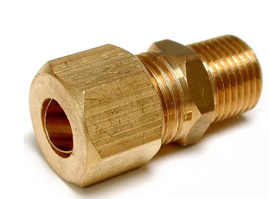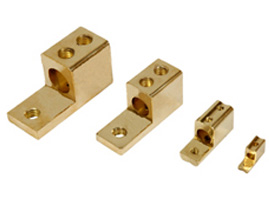
Brass Battery Terminals
Brass battery terminals are precision-manufactured conductive components designed to establish secure electrical connections between batteries, cables and connected equipment. Produced from suitable copper-zinc brass alloys, they offer good machinability, mechanical stability and corrosion resistance for compatible automotive, industrial and backup-power applications.
Available in different terminal configurations, mounting arrangements and connection profiles, brass battery terminals can be customized with specific cable openings, threaded features, clamping structures and contact dimensions. Natural brass and protective plating options can be selected according to the battery system, mating components and operating environment.
Applications of Brass Battery Terminals
Automotive Batteries
Used in compatible battery connection assemblies for cars, vans and light commercial vehicles to connect battery cables with suitable terminals.
Industrial Battery Systems
Applied in selected backup power units, industrial control systems and battery installations requiring secure cable connections.
UPS Equipment
Used in suitable uninterruptible power supply systems for connecting battery banks with compatible electrical equipment.
Solar Energy Storage
Suitable for compatible battery banks and energy storage equipment where terminal dimensions and current capacity meet system requirements.
Marine Electrical Systems
Used in selected marine battery connections where the terminal alloy and surface finish are suitable for the operating environment.
Generator Starting Systems
Applied in battery connection arrangements for generator starting circuits and associated power equipment.
Electric Mobility
Used in selected battery packs and auxiliary electrical systems, subject to the design's current and safety requirements.
General Electrical Equipment
Suitable for battery-powered machinery, control devices and specialized power assemblies requiring compatible connection fittings.
Features of Brass Battery Terminals
Electrical Conductivity
Brass provides suitable electrical conductivity for properly designed battery connections, with performance depending on terminal dimensions and contact conditions.
Secure Cable Connection
Supports reliable cable attachment through compatible clamping, bolting or threaded connection arrangements.
Corrosion Resistance
Offers resistance to corrosion in suitable operating environments, with protective finishes available for specified conditions.
Mechanical Strength
Provides suitable mechanical strength for many battery terminal and cable connection applications.
Precision Machining
Enables accurate threads, contact surfaces, cable openings and mounting features for compatible battery connections.
Versatile Design
Available in different terminal shapes, connection sizes and mounting configurations to suit varied battery layouts.
Surface Treatment Compatibility
Can be supplied with tin, nickel and other specified protective finishes according to application requirements.
Maintenance-Friendly Construction
Designed to support inspection, tightening and servicing in accordance with the battery manufacturer's instructions.
Custom Manufacturing
Terminal dimensions, threads, cable openings and connection features can be tailored to approved technical drawings.
Technical Specifications of Brass Battery Terminals
| Parameter | Specification |
|---|---|
| Product Name | Brass Battery Terminals |
| Product Type | Battery Posts, Cable Terminals, Clamps and Connection Fittings |
| Base Material | Copper-Zinc Brass Alloy |
| Connection Type | Clamp-On, Threaded, Bolted or Application-Specific |
| Cable Compatibility | Selected According to Cable Cross-Section and Terminal Design |
| Thread Type | Metric, Unified or Specified Thread Configuration |
| Manufacturing Process | CNC Machining, Automatic Turning, Forging or Forming, Depending on Design |
| Electrical Performance | Depends on Alloy Composition, Contact Area, Clamping Force and Surface Condition |
| Current Capacity | Application-Specific and Verified by Design or Testing |
| Dimensional Tolerance | As Specified in the Technical Drawing |
| Surface Finish | Natural Brass, Tin-Plated, Nickel-Plated or Specified Coating |
| Customization | Available According to Battery and Cable Connection Requirements |
Key Specifications of Brass Battery Terminals
| Parameter | Details |
|---|---|
| Product Category | Battery Electrical Connection Components |
| Material Grades | CuZn35, CuZn37 or Other Suitable Brass Alloys |
| Terminal Configuration | Positive or Negative Terminal Designs, Cable Connectors or Threaded Fittings |
| Cable Size | Selected According to Conductor Cross-Section and Connection Method |
| Mounting Arrangement | Clamp, Stud, Nut-and-Bolt or Threaded Connection |
| Contact Surface | Designed for Stable Electrical Contact with Compatible Mating Parts |
| Current Rating | Determined by Terminal Geometry, Cable Size, Temperature Rise and Application |
| Operating Environment | Automotive, Industrial, Backup Power or Other Compatible Systems |
| Custom Options | Terminal Dimensions, Thread Sizes, Cable Openings and Surface Plating |
| Inspection Requirements | Dimensional, Visual, Connection-Resistance and Application-Specific Testing |
Current capacity and temperature limits must be confirmed for the complete terminal-and-cable assembly. Brass terminals should not be assumed to provide the same conductivity as copper terminals of identical dimensions.
Applicable Standards for Brass Battery Terminals
Brass battery terminals should be designed and evaluated according to the requirements applicable to their battery type, vehicle or equipment category and connection arrangement. The relevant standards depend on the finished product and its intended operating conditions.
Requirements for lead-acid starter batteries, where applicable to the battery connection system.
Requirements for lead-acid traction batteries, where applicable to the intended battery application.
Relevant electrical connector test methods where the terminal design falls within the applicable scope.
Requirements for road-vehicle electrical connections, where applicable to the connection design.
Applicable specifications for brass alloy composition and material properties.
Requirements for dimensions, cable compatibility, contact resistance, mechanical retention and environmental testing.
The applicable standard depends on the intended battery system and terminal design. Compliance should be verified against the specific finished product and its installation requirements.
Brass Battery Terminals Length and Size
Overall Length
- Customized according to terminal design
- Determined by the required mounting arrangement
Terminal Opening
- Matched to the specified battery post or stud
- Designed for compatible mating connections
Cable Entry Size
- Selected according to conductor cross-section
- Matched to the specified termination method
Thread Size
- Metric or other specified thread configurations
- Selected according to mating hardware requirements
Contact Dimensions
- Designed for suitable electrical contact area
- Configured for mechanical stability
Mounting Features
- Slots and clamping bolts
- Threaded holes or cable lug arrangements
Custom Dimensions
- Special terminal shapes, diameters and lengths
- Custom cable openings and mounting configurations
- Manufacturing according to approved technical drawings
Correct sizing is essential for secure attachment, low-resistance electrical contact and prevention of excessive heating during operation. Terminal dimensions should match the battery post, cable cross-section and specified connection method.
Material Used for Brass Battery Terminals
Brass battery terminals are manufactured from copper-zinc alloys selected for machinability, mechanical strength, corrosion resistance and electrical connection performance. The appropriate grade depends on terminal geometry and operating requirements.
Available Brass Materials
- CuZn35: A copper-zinc brass alloy suitable for selected precision-machined components.
- CuZn37: A commonly used brass alloy for general-purpose electrical and mechanical fittings.
- Free-Machining Brass: Suitable grades may be selected for complex terminal profiles, threaded features and high-volume manufacturing.
- Special Brass Alloys: Alternative compositions can be specified for particular environmental or manufacturing requirements.
Material selection should account for electrical resistance, clamping pressure, operating temperature, vibration, moisture exposure and compatibility with battery posts and cable materials. For high-current systems, brass should be evaluated against copper or purpose-designed plated copper terminals, as conductivity affects voltage drop and heat generation.
Surface Finish Options for Brass Battery Terminals
Natural Brass Finish
Retains the characteristic golden-yellow appearance of brass and is suitable for specified battery connection applications.
Tin-Plated Finish
Provides a protective surface layer and is commonly considered for suitable electrical connection components.
Nickel-Plated Finish
Offers a harder surface coating for selected mechanical and environmental requirements.
Silver-Plated Finish
Available for specialized electrical applications requiring high surface conductivity.
Polished Brass Finish
Provides a smoother and brighter appearance for visible terminal components.
Custom Protective Coating
Other specified surface treatments can be considered according to the battery environment and required performance.
The selected finish should be compatible with the mating battery post and cable connector. Contact surfaces must remain clean and properly tightened according to the battery manufacturer's instructions to help reduce connection resistance and overheating risks.