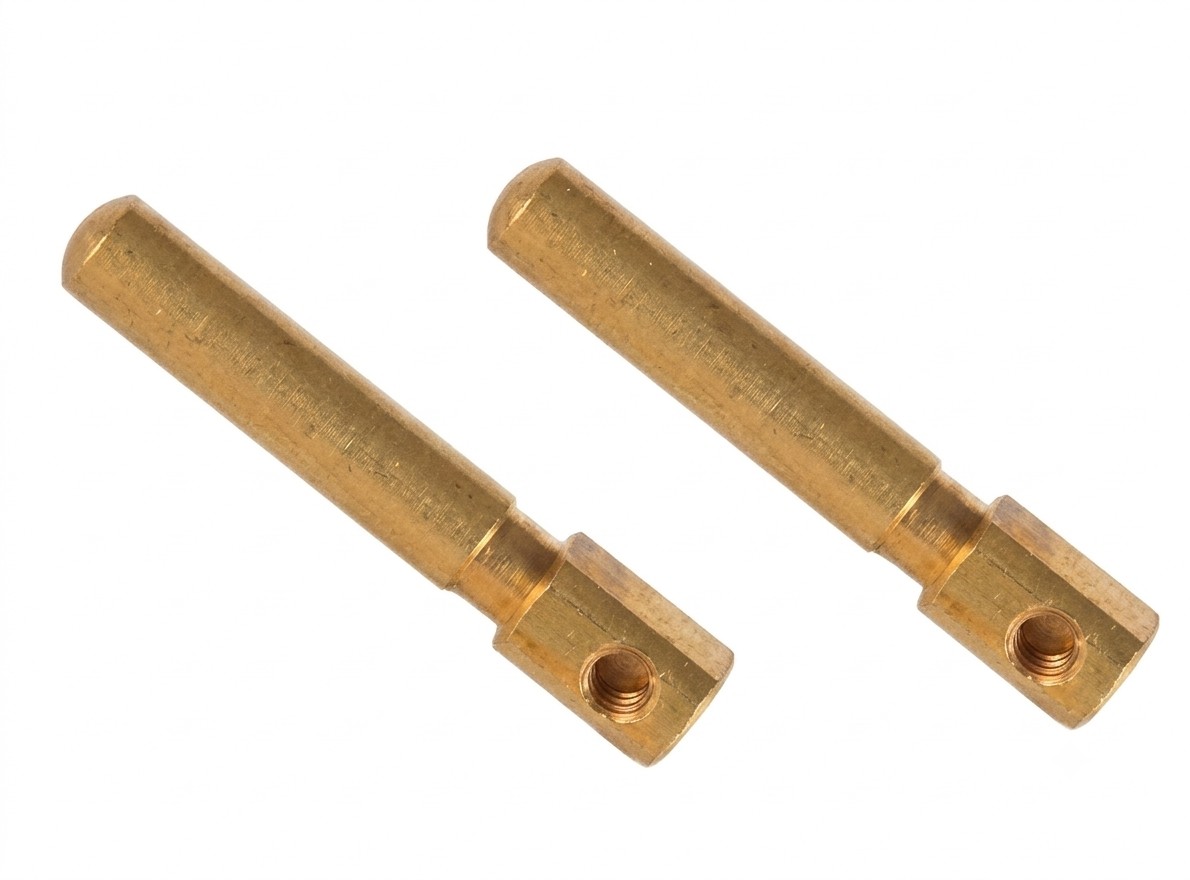
Brass Electrical Pins
Brass electrical pins are precision-manufactured conductive components designed to establish electrical connections in plugs, sockets, connectors and specialized electrical assemblies. Manufactured from suitable copper-zinc brass alloys, they offer good machinability, mechanical stability and electrical conductivity for compatible contact applications.
Available in cylindrical, stepped, tapered, grooved and customized profiles, brass electrical pins can be produced in different diameters, lengths, tip configurations and mounting arrangements. Natural brass and plating options, including tin, nickel, silver and gold, can be specified according to the contact design and application requirements.
Applications of Brass Electrical Pins
Electrical Plugs and Sockets
Used as conductive contact pins in compatible plug and socket designs to establish electrical connections.
Industrial Connectors
Applied in connector assemblies, coupling systems and equipment interfaces requiring accurately shaped contact components.
Switchgear Assemblies
Used in selected connection mechanisms and electrical control equipment according to assembly requirements.
Power Distribution Systems
Suitable for conductive terminals and connection interfaces in compatible electrical distribution assemblies.
Domestic Appliances
Integrated into power connection components and electrical interfaces used in household equipment.
Automotive Electronics
Used in selected wiring connectors and electrical interface components for automotive applications.
Electronic Equipment
Applied in connector housings, instrument assemblies and specialized electronic devices.
Custom Electrical Products
Manufactured with specific contact geometry, mounting features and connection profiles according to customer requirements.
Features of Brass Electrical Pins
Electrical Conductivity
Brass provides suitable electrical conductivity for contact applications when the alloy and pin dimensions are properly selected.
Precision Dimensions
Manufactured to controlled diameters, lengths and contact profiles for accurate fitting within compatible assemblies.
Good Machinability
Suitable for producing smooth cylindrical pins, grooves, shoulders, threads and other detailed contact geometries.
Mechanical Durability
Offers suitable mechanical strength for a range of plug, connector and terminal applications.
Corrosion Resistance
Provides resistance to corrosion in many normal operating environments, depending on alloy and surface conditions.
Consistent Contact Geometry
Accurate contact profiles help support proper engagement with compatible sockets and mating components.
Surface Finish Options
Available with natural brass, tin, nickel, silver, gold and other specified surface treatments.
Custom Design Flexibility
Pin diameters, lengths, tip shapes, grooves and mounting configurations can be customized.
Versatile Assembly Methods
Designed for press-fit, soldered, threaded, crimped or other specified mounting arrangements.
Technical Specifications of Brass Electrical Pins
| Parameter | Specification |
|---|---|
| Product Name | Brass Electrical Pins |
| Product Type | Conductive Electrical Contact Pins |
| Material | Copper-Zinc Brass Alloy |
| Pin Shape | Cylindrical, Stepped, Tapered, Flat-Ended or Custom Profile |
| Manufacturing Process | CNC Machining, Automatic Turning, Cold Forming or Precision Stamping |
| Contact Configuration | Solid Pin or Design-Specific Contact Geometry |
| Mounting Method | Press-Fit, Soldered, Threaded, Crimped or Specified Assembly Method |
| Dimensional Tolerance | As per Approved Drawing or Applicable Product Standard |
| Electrical Performance | Depends on Alloy Composition, Geometry, Contact Pressure and Surface Treatment |
| Current Rating | Application-Specific and Verified Through Design or Testing |
| Surface Finish | Natural Brass, Tin-Plated, Nickel-Plated, Silver-Plated or Specified Coating |
| Quality Inspection | Dimensional, Visual and Application-Specific Electrical Testing |
| Customization | Available According to Customer Drawings and Product Requirements |
Key Specifications of Brass Electrical Pins
| Parameter | Details |
|---|---|
| Product Category | Electrical Contact Components |
| Material Grades | CuZn35, CuZn37 or Other Suitable Brass Alloys |
| Pin Diameter | Approximately 1 mm to 12 mm, Depending on Design |
| Pin Length | Approximately 5 mm to 100 mm, Depending on Application |
| Contact Profile | Round, Stepped, Grooved, Tapered or Customized |
| Connection Type | Plug-In Contact, Terminal Contact or Mounting Pin |
| Mounting Features | Shoulders, Grooves, Threads or Retention Features as Required |
| Contact Resistance | Depends on Material, Plating, Mating Geometry and Contact Force |
| Current-Carrying Capacity | Established for the Specific Pin and Connector Assembly |
| Customization Options | Diameter, Length, Tip Shape, Tolerances and Plating |
The listed dimensional ranges are indicative only. Actual sizes and electrical performance depend on the pin design, mating components and intended application.
Applicable Standards for Brass Electrical Pins
Brass electrical pins should be designed and evaluated according to the standards applicable to the finished plug, socket, connector or electrical device. The relevant requirements depend on the product's intended use and design.
General requirements for plugs and socket-outlets for household and similar purposes, where applicable.
Safety requirements for connectors where the finished product falls within the standard's scope.
Requirements for industrial plugs, socket-outlets and couplers, where applicable.
Test methods for electrical connectors, including relevant electrical and mechanical tests.
General-purpose metric screw thread dimensions where threaded features are incorporated.
Metric screw thread tolerances for applicable threaded pin configurations.
Applicable requirements for brass alloy composition and material properties.
Dimensions, contact resistance, retention force, plating thickness and durability criteria as specified.
The applicable standard depends on the finished product and its intended use. A standalone brass pin should not automatically be considered compliant with a plug, socket or connector standard without the relevant product-level assessment.
Brass Electrical Pins Length and Size
Diameter Range
- Approximately 1 mm to 12 mm
- Selected according to contact and mounting requirements
Length Range
- Approximately 5 mm to 100 mm
- Determined by connector and equipment design
Tip Design
- Flat-ended and rounded profiles
- Tapered or specially shaped contact tips
Mounting Diameter
- Specified according to connector housing
- Matched to the intended installation method
Contact Length
- Selected for required mating engagement
- Designed around compatible contact geometry
Retention Features
- Grooves and shoulders
- Threads or other specified retention details
Custom Dimensions
- Non-standard diameters, lengths and contact profiles
- Custom tip shapes, grooves and mounting arrangements
- Manufacturing according to approved technical drawings
Dimensional selection should account for contact alignment, insertion and withdrawal forces, electrical clearances, mounting requirements and the intended current rating.
Material Used for Brass Electrical Pins
Brass electrical pins are manufactured from copper-zinc alloys selected according to machinability, electrical conductivity, mechanical strength and the requirements of the finished contact component.
Available Brass Materials
- CuZn35: A copper-zinc alloy suitable for selected precision-machined contact components.
- CuZn37: A commonly used brass alloy for general-purpose electrical and mechanical parts.
- Free-Machining Brass: Suitable grades can be selected for complex pin profiles and high-volume automatic turning.
- Special Brass Alloys: Alternative grades can be specified where particular mechanical, electrical or environmental properties are required.
Material selection should consider conductivity, contact resistance, mechanical wear, operating temperature and environmental exposure. For high-current or frequent-mating applications, the selected alloy and contact design should be verified for the intended operating conditions.
Surface Finish Options for Brass Electrical Pins
Natural Brass Finish
Retains the original golden-yellow appearance of the brass alloy and is suitable for specified contact and mechanical applications.
Tin-Plated Finish
Provides a protective surface layer and is commonly selected for suitable electrical contact applications.
Nickel-Plated Finish
Offers a harder surface coating and additional protection for selected contact and mechanical applications.
Silver-Plated Finish
Suitable for specialized contact applications requiring high surface conductivity.
Gold-Plated Finish
Available for selected low-level signal contacts where stable contact performance is required.
Polished Brass Finish
Provides a smooth, bright surface for suitable decorative or mechanical applications.
Custom Surface Treatment
Other specified coatings can be considered according to mating materials, operating conditions and performance requirements.
Finish selection should consider contact resistance, mating compatibility, coating thickness, wear resistance and the intended electrical environment.